
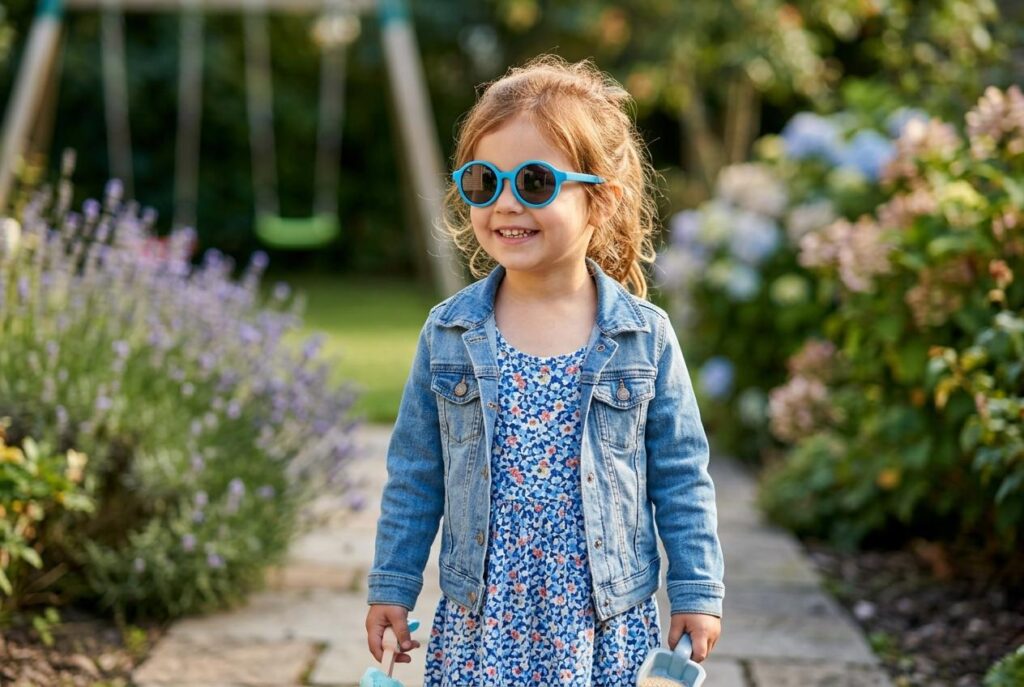
You watch your child slather on sunscreen before heading outside, but you might forget about protecting their eyes. The sun’s harmful UV rays can damage your child’s vision just as easily as they burn their skin.
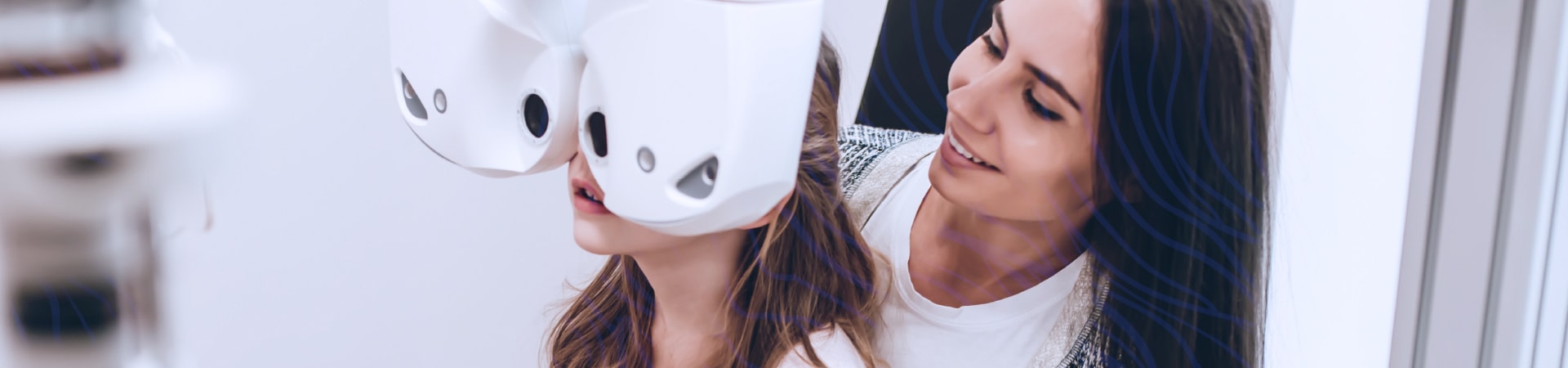
Children’s sunglasses aren’t just a fashion accessory. They’re essential protection that can prevent serious eye problems both now and later in life. At 2020 Eyecare Ohio, our team understands how crucial early eye protection is for your child’s long-term vision health. That’s why comprehensive children’s eye exams include discussions about proper sun protection strategies.
Your Child’s Eyes Face Greater UV Damage Than You Think
How Children’s Eyes Differ from Adult Eyes
Your child’s eyes work differently from yours, which puts them at higher risk for UV damage. Their pupils stay larger throughout the day, allowing more harmful light to reach the back of their eyes.
The clear lenses in young eyes don’t filter out UV rays as effectively as those in adult eyes do. Think of it like a window without tinted glass: everything gets through. Your child’s eyelids are also thinner, offering less natural protection from overhead sun.
UV Damage Accumulates Over Time
Your child’s eyes collect UV damage like a savings account, except this account balance hurts them later. Research shows that 80% of a person’s lifetime UV exposure happens before age 18.
Every sunny afternoon at the playground and beach day adds up. The damage sits quietly in their eyes for years before showing up as cataracts, macular degeneration, or other vision problems in adulthood.
Serious Eye Problems That UV Exposure Can Cause
Short-Term Effects You Can See Right Away
Sometimes UV damage shows up within hours of sun exposure. Your child might come inside with red, watery eyes that hurt when they blink. This condition, called photokeratitis, is basically a sunburn on the surface of the eye.
You’ll notice them rubbing their eyes or complaining that everything looks blurry. These symptoms usually go away within a day or two, but they signal that damage has occurred. If your child experiences persistent eye pain, it’s time to see a professional.
Long-Term Conditions That Can Develop Later
The UV radiation your child absorbs today can cause permanent vision damage decades later. Because a child’s eyes cannot filter out UV rays as effectively as adult eyes, harmful light penetrates deeper, causing cumulative damage from a very young age. This can include:
- Cataracts: Constant UV exposure triggers oxidative stress that slowly clouds the lens of the eye. Heavy sun exposure during childhood frequently causes cataracts to develop much earlier in adulthood.
- Macular degeneration: Because UV rays penetrate all the way to the back of a child’s eye, they damage the macula, the center of the retina. This early cellular damage increases the risk of macular degeneration later in life, which impacts the central vision needed for reading and recognizing faces.
- Skin cancer: The skin around a child’s eyes is incredibly thin. Repeated UV exposure directly damages cell DNA, drastically increasing the risk of skin cancers developing on the eyelids later in life.
Protecting your child with UV-blocking sunglasses and wide-brimmed hats today isn’t just about comfort. It is active preservation of their future sight.
When Your Child Needs Sunglasses Most
Outdoor Activities and Sports
Your child needs eye protection during any outdoor activity, not just when they’re obviously squinting. Beach trips and pool days create double trouble because water reflects UV rays back up into their eyes.
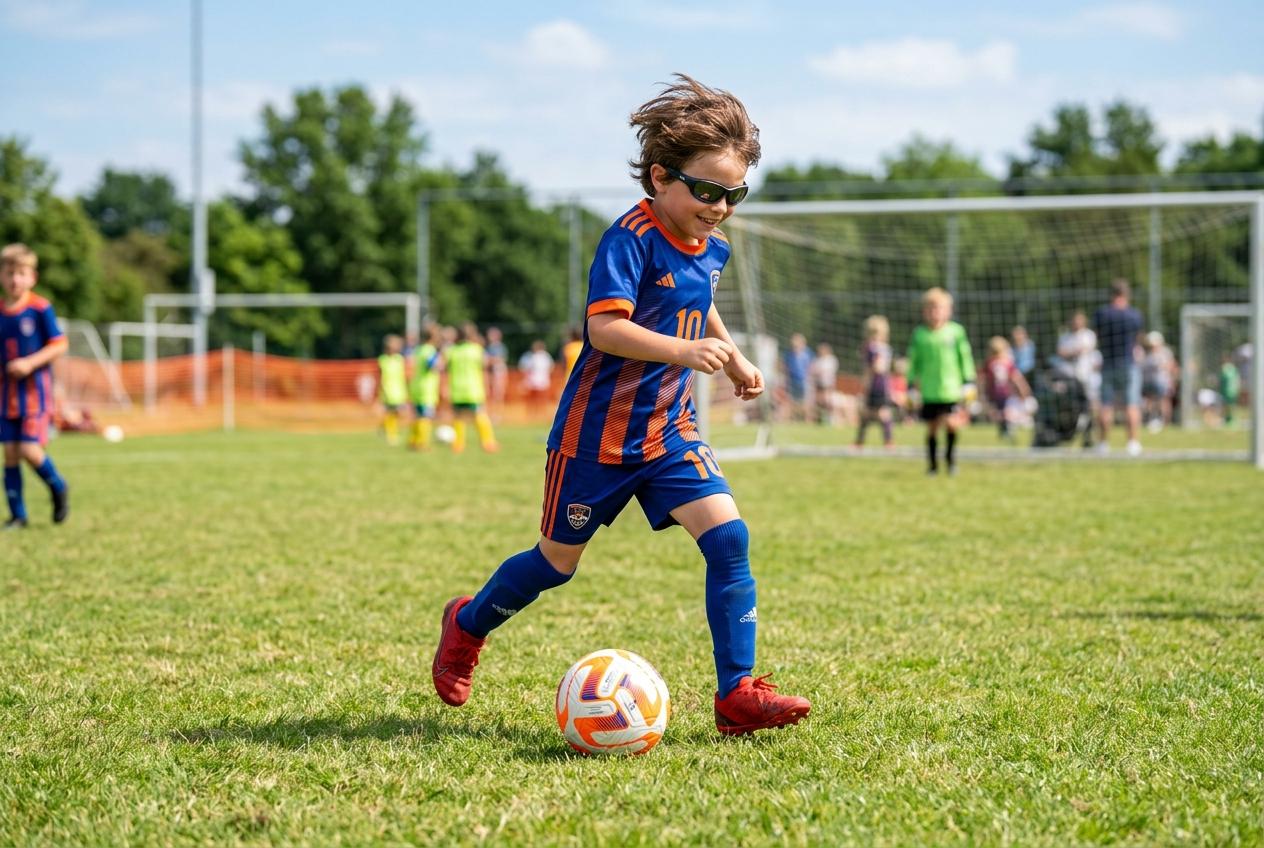
Soccer games, playground visits, and backyard adventures all expose their eyes to harmful rays. Even on cloudy days, up to 80% of UV radiation can pass through, so don’t skip the sunglasses when the sky looks gray. Consider protective sports eyewear for active children.
High-Risk Environments
Some environments multiply UV exposure dramatically. Snow acts like a giant mirror, bouncing UV rays up from the ground and down from the sky. Your child gets hit twice as hard during winter activities.
Mountain trips expose your family to stronger UV rays because the atmosphere is thinner at higher elevations. The sun’s rays are strongest between 10 AM and 4 PM, right when your child is most likely to be outside playing. UV protection basics can help you plan safer outdoor activities.
How to Choose the Right Sunglasses for Your Child
Look for sunglasses that block 100% of both UVA and UVB rays. The label should specifically say “100% UV protection.” Remember: darker lenses don’t automatically mean better protection.
Wraparound styles work better than small lenses because they block rays from coming in around the sides. Choose impact-resistant lenses that can handle drops, throws, and the general chaos of childhood.
Make Sunglasses Part of Your Child’s Daily Routine
Tips to Get Your Child to Wear Them
Let your child choose their own sunglasses style within your UV protection requirements. They’re much more likely to wear glasses they picked out themselves.
Make sunglasses a family habit by wearing yours every time you go outside. Your child copies what you do, so model the behavior you want to see. Start this routine when they’re young, and it becomes as automatic as buckling their seatbelt.
When to Replace Your Child’s Sunglasses
Replace sunglasses when the lenses get scratched or the frames no longer fit properly. Deep scratches can reduce UV protection and create visual distortions.
Children outgrow sunglasses just like they outgrow shoes. Glasses that slide down constantly or pinch their temples won’t provide proper protection.
Keep Their Eyes Protected
Your child’s vision deserves the same protection you give their skin. Our team at 2020 Eyecare Ohio can help you find the right eye protection for your child’s lifestyle and needs. Schedule an eye exam to learn more about keeping your child’s eyes healthy for life.