

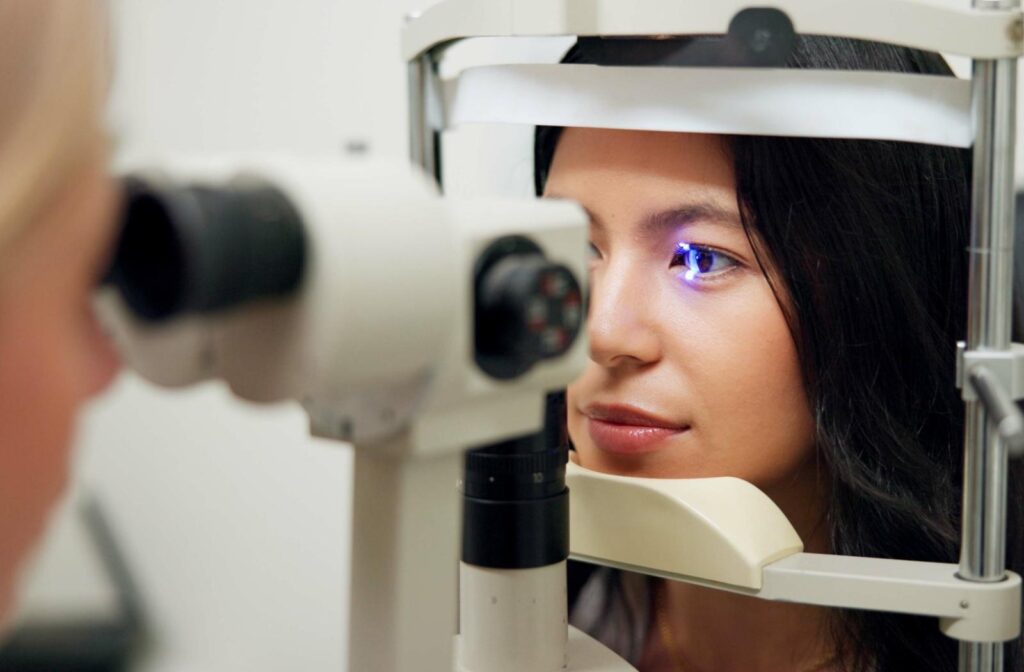
Your vision feels like you’re looking through a funhouse mirror: everything appears distorted, blurry, and frustrating. You might notice halos around lights when driving at night or find yourself squinting constantly to make sense of what should be clear images.
You have several effective non-surgical treatment options for keratoconus, including specialty contact lenses like sclerals, minimally invasive procedures, and daily management strategies that can dramatically improve your vision and comfort. Our team at 2020 Eyecare Ohio can help you explore the options that are best suited to your individual needs.
What Is Keratoconus?
Keratoconus happens when your cornea, the clear front part of your eye, becomes thin and bulges outward into a cone shape. Instead of the normal dome shape that focuses light properly, your cornea creates an irregular surface that scatters light in different directions.
This condition can affect your daily life in several frustrating ways:
- Irregular corneal shape causes blurry, distorted vision
- Light sensitivity and glare problems during the day
- Difficulty with night driving due to halos and starbursts
- Frequent prescription changes as your condition progresses
Non-Surgical Options
Scleral Lenses
These larger contacts rest on the white part of your eye, the sclera, instead of sitting directly on your cornea. Think of them as creating a new, smooth surface that light can pass through properly, like putting a clear window over your irregular cornea.
Scleral lenses offer several benefits that can transform your daily experience:
- Vault over your irregular cornea without touching it
- Provide all-day comfort with a reservoir of saline solution
- Reduce dry eye symptoms significantly
- Allow clear, stable vision for work and activities
Rigid Gas Permeable (RGP) Contacts
These hard lenses sit directly on your cornea and help reshape how light enters your eye. RGP contacts maintain their shape on your eye, creating a smooth optical surface that corrects the irregular astigmatism caused by keratoconus.
Hybrid Contact Lenses
These contacts combine a rigid center for clear vision with a soft outer ring for comfort. You get the visual benefits of hard contacts with some of the comfort of soft lenses, perfect if you’ve struggled with RGP comfort but need the vision correction they provide.
Custom Eyeglasses with Special Coatings
While regular glasses might not fully correct vision with keratoconus, specially designed lenses with anti-glare and light-filtering properties can help manage symptoms. These work particularly well in the early stages or as backup vision correction when you can’t wear contacts.
Corneal Cross-Linking (CXL)
This minimally invasive procedure strengthens corneal tissue to slow or stop the progression of keratoconus. By combining riboflavin (Vitamin B2) drops with a specialized UV light, the treatment creates new bonds between the collagen fibers in your cornea. This strengthening process helps stabilize the corneal structure and can prevent the condition from worsening over time.
Daily Care Strategies That Can Make a Difference
Small changes in your daily routine can protect your eyes and improve comfort, including:
- Protecting your eyes from UV exposure with wraparound sunglasses
- Using preservative-free artificial tears throughout the day for comfort
- Avoid rubbing your eyes to prevent further corneal damage
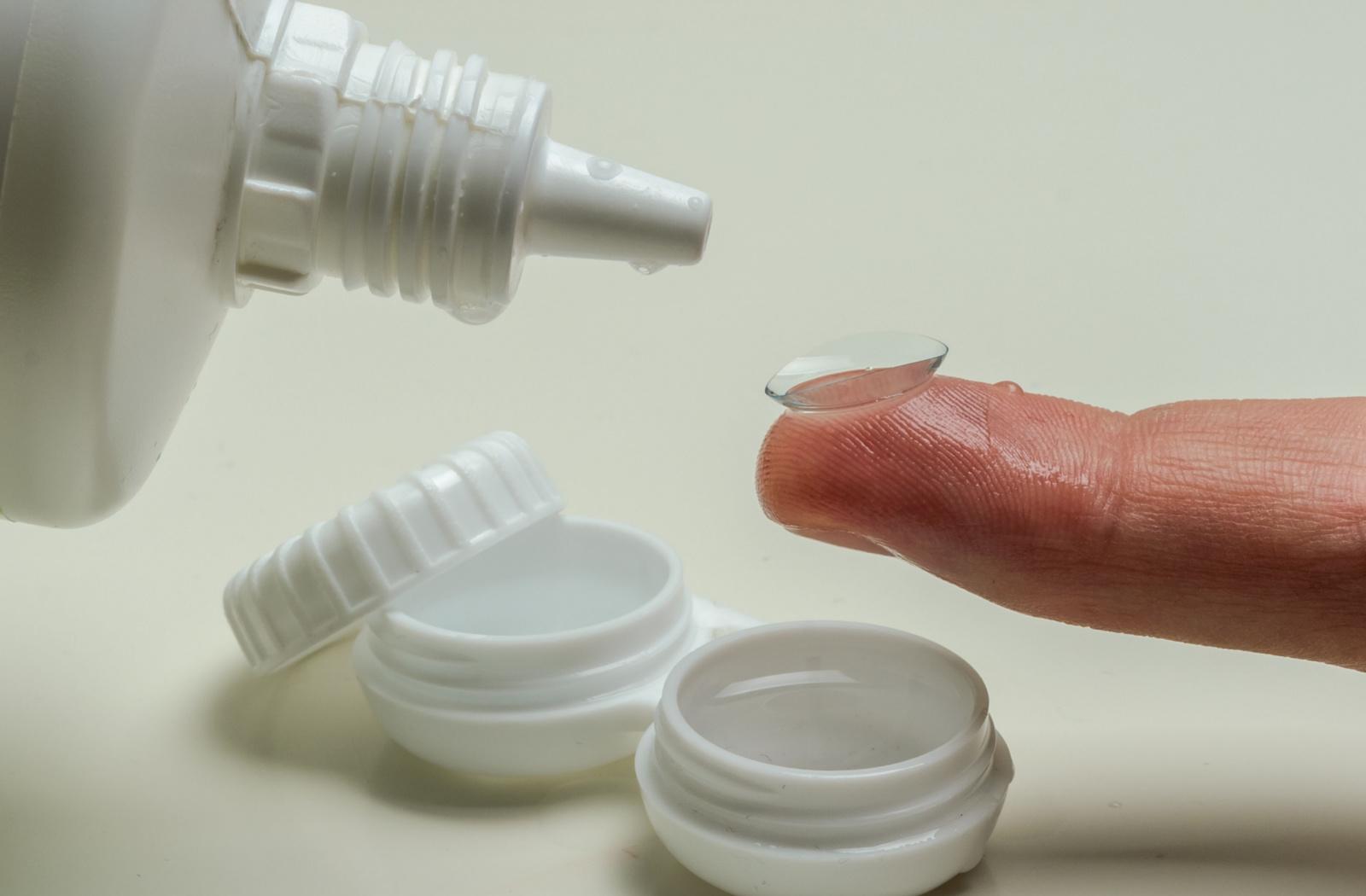
- Maintaining proper contact lens hygiene with recommended cleaning solutions
- Creating an eye-friendly environment with humidifiers to reduce dryness
Dry eye therapy options can provide additional comfort for those dealing with both keratoconus and dry eye symptoms.
Working with Your Eye Care Team in Loveland
Keratoconus requires specialized care from optometrists experienced with this condition. Your eye care team monitors changes in your corneal shape and adjusts your treatment plan as needed.
Regular care includes:
- Monitoring appointments to track progression
- Custom lens fittings for optimal comfort and vision
- Treatment plan adjustments based on your changing needs
- Ongoing support and education about your condition
Contact lens fittings become especially important for keratoconus patients who need specialized lens designs. Corneal topography helps eye doctors create precise maps of your corneal shape for custom treatment planning.
See Clearly Again
Living with keratoconus doesn’t mean accepting poor vision or discomfort. Our team at 2020 Eyecare Ohio understands the unique challenges you face and offers modern solutions tailored to your specific needs. Contact our practice today to explore which non-surgical treatment options can help you see clearly and comfortably again.