

Keratoconus symptoms often develop so gradually that most people brush them off as normal eye strain. Road signs might look a little blurry one week, and headlights might smear into messy halos the next.
The earliest warning signs include blurry or cloudy vision, glare and halos around lights, trouble seeing at night, and a glasses prescription that keeps changing. Once you know what to look for, you’ll have an easier time deciding when to schedule an exam.
What Keratoconus Actually Does to Your Eyes
Your cornea is the clear, dome-shaped window at the front of your eye. It bends light so images land sharply on the back of your eye.
With keratoconus, that dome gradually thins and bulges outward into a cone shape. When the shape changes, light stops focusing the way it should, and your vision blurs.
This matters because it touches the small stuff you do every day. Reading a text, recognizing a friend across the room, and driving home after sunset can all start to feel harder than they used to.
Early Warning Signs to Watch For
Keratoconus tends to creep in quietly, so the first clues are easy to shrug off. Pay attention if everyday tasks start to feel more strained than they should.
Some of the earliest signs include:
- Blurry or cloudy vision that doesn’t fully clear up with a new prescription
- Sensitivity to light, glare, and halos around bright spots
- Trouble seeing well at night
When Your Prescription Won’t Stop Changing
One of the loudest signals is a prescription that keeps changing. If your optometrist updates your glasses more often than feels normal, bring it up at your next visit.
You might also notice a sudden jump in astigmatism. Over time, glasses may stop sharpening your sight the way they once did, and that’s worth flagging too.
Other Clues Your Eyes Send
Your eyes have quieter ways of asking for help. Tired, achy eyes after an ordinary day can point to something deeper.
Watch for headaches that settle around your eyes and brow. And mention any ghosting, where lights smear or double, at your next appointment.
When Keratoconus Starts and How It Progresses

Keratoconus often starts during the teen years or early adulthood. That timing can make it tricky to notice, since growing eyes change anyway.
From there, it usually progresses slowly through your 20s and into your 30s. Both eyes can be affected, though one often progresses ahead of the other.
What Can Mimic Keratoconus
Regular astigmatism can resemble keratoconus in the early days. That overlap is one reason a careful exam matters so much.
Other corneal shape conditions can share similar symptoms, too. A close look at your cornea helps your optometrist tell these apart, especially since keratoconus is less common than everyday refractive errors.
How an Eye Exam Can Spot Keratoconus Early
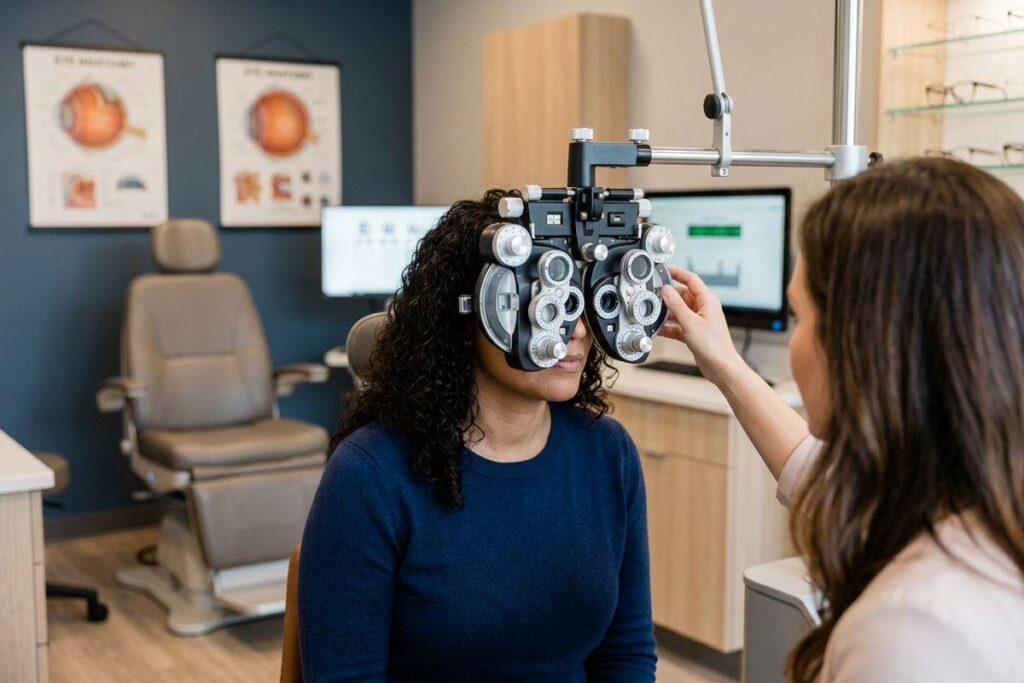
A thorough eye exam can spot small changes in your cornea long before you notice anything yourself. Your optometrist looks for subtle changes in how your cornea bends light.
Corneal mapping adds another layer of detail. This scan checks the shape and thickness of your cornea and creates a colorful map that highlights any cone-shaped bulge, similar to the corneal topography used to track corneal changes.
Early detection gives you more room to act. The sooner your optometrist spots a change, the more options you may have to help slow its progression.
Vision Solutions for Keratoconus and Dry Eyes
Once glasses stop doing the job, scleral lenses often become the next option. These larger lenses rest on the white of your eye and vault over the cornea, so the cone never touches the lens itself.
That design creates a smoother surface for light to pass through, and many people find the lenses comfortable through a long day.
Scleral lenses also hold a small pool of fluid against your eye, which may help with dry, gritty eyes too. If your eyes burn or feel sandy by afternoon, that extra moisture can offer some relief.
Other Lens Options Worth Knowing About
Scleral lenses aren’t your only option. Rigid gas permeable lenses create a firm, smooth surface that can sharpen vision over an irregular cornea.
Hybrid lenses pair a firm center with a soft outer edge for added comfort. Talk with your optometrist about which lens matches how your eyes feel and see day to day.
Ready to See the World Clearly Again?
Noticing these changes early can make a real difference in how you manage keratoconus down the road. If your vision keeps changing, or if glare and halos seem to follow you everywhere, don’t brush it off.
The optometrists at 20/20 Eyecare can map your cornea, answer your questions, and help you find a lens that fits your life. Schedule a comprehensive eye exam today and get a clear picture of what’s going on with your eyes.